
Top 10 AI-Powered Yoga Apps for Personalized Workouts in 2026
Reviews and Ratings
April, 11, 2026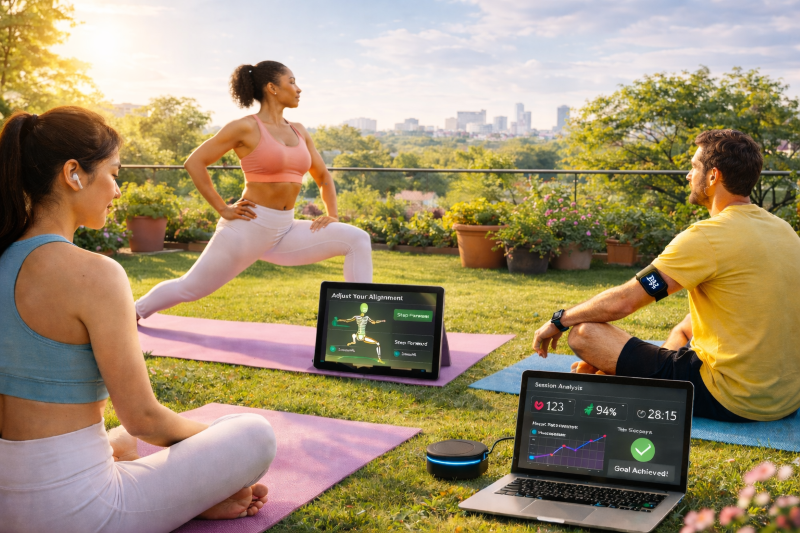
The wellness industry in the United States is undergoing a powerful transformation. As stress levels rise, digital lifestyles expand, and personalized health becomes a priority, yoga has emerged as a cornerstone of modern well-being. But what makes today’s yoga ecosystem truly revolutionary is the integration of artificial intelligence (AI). From generating custom routines to analyzing posture in real time, AI-powered yoga apps are redefining how Americans practice yoga at home, in studios, and even while traveling.
This research-driven article explores the roots of yoga, the reasons behind its growing popularity in the U.S., and a detailed analysis of the top 10 AI-powered yoga apps that personalize workouts. It also critically examines whether these technologies could replace human instructors—and what the future of yoga looks like in a digital-first world.
History and Roots of Yoga
Yoga originated as a complete system to connect human consciousness with human body movement and human soul enlightenment more than 5000 years ago in ancient India. The term "yoga" derives from the Sanskrit root word yuj, which means "to join" or "to unite." Ancient texts such as the Vedas and the Yoga Sutras of Patanjali, which established an eight-limb system that included ethical guidelines, physical postures, breathing exercises, and meditation practices, contain the first documented mentions of yoga.
Yoga practice maintains its traditional roots because it requires individualized teaching methods that adapt to each student's needs. The guru–shishya method of instruction enables teachers to assess each student through their physical abilities, mental condition, and spiritual objectives that they need to learn. The process of AI integration into yoga practices exists because advanced technological systems are building elements that replicate the intuitive methods used by ancient instructors.
Western societies first encountered yoga practice during the late 19th century and early 20th century. The United States saw the growing popularity of yoga practice between 1960 and 1970 due to cultural exchanges and rising interest in Eastern philosophical systems. Yoga practice developed into different styles, which included Hatha, Vinyasa, Ashtanga, power yoga, and other styles that emphasized physical fitness instead of spiritual growth.
The yoga industry in the United States generates revenue that exceeds billions of dollars. The Yoga Alliance and Yoga Journal Study (2016) found that more than 36 million Americans practice yoga, which has continued to increase, especially after the pandemic. The U.S. government leads global research output for yoga studies, according to research published on PubMed Central (PMC), which shows contemporary wellness science uses yoga as a fundamental research area.
The organization faces one major obstacle because it needs to personalize services for large numbers of customers. Students in large classrooms, together with digital learning materials, receive basic instructional support. Data scientists use artificial intelligence to create personalized training programs that match individual needs through yoga practice.
Top 10 Yoga Apps That Personalize Workouts Using AI
1. Down Dog – The Most Advanced AI Sequencing Engine
Down Dog is often considered the closest example of true AI-driven yoga personalization.
How It's AI Works
Instead of storing fixed classes, Down Dog uses an algorithm that assembles yoga sessions dynamically. It pulls from a large database of poses and builds a sequence based on your inputs.
-
Over 60,000 possible workout configurations
-
You choose:
-
Skill level
-
Focus area (e.g., flexibility, back pain)
-
Session length
-
Voice and music
-
The AI then creates a completely new class every time, which keeps users engaged and prevents repetition.
Why It Stands Out
-
Highly customizable (even pace and pose preferences)
-
Learns what you “like” or “dislike.”
-
Great for beginners and long-term users
Best For
Users who want maximum personalization and variety without needing a human instructor.
2. Asana Rebel – AI Meets Fitness & HIIT
Asana Rebel is not a traditional yoga app—it’s more of a fitness-first platform powered by AI recommendations.
How It's AI Works
-
You input goals (weight loss, strength, flexibility)
-
The app recommends structured workout plans
-
Uses goal-based filtering and adaptive suggestions
It blends yoga with:
-
HIIT (High-Intensity Interval Training)
-
Strength training
-
Lifestyle tracking (sleep, nutrition)
Key Insight
AI here is less about pose correction and more about fitness planning and habit building.
-
Personalized workouts based on goals
-
Tracks progress and suggests next sessions
Limitations
-
Less flexible than the Down Dog
-
Smaller workout library (~100+ workouts)
Best For
Users who want yoga + weight loss + fitness transformation.
3. Yoga-Go – AI for Busy Lifestyles
Yoga-Go focuses on time-based personalization, which is a growing AI trend.
How AI Works
-
Builds routines based on:
-
Available time (10–30 mins)
-
Fitness level
-
Target areas (core, flexibility, fat loss)
-
Unique Value
It solves a real problem: “I don’t have time for yoga.”
Instead of long sessions, it creates:
-
Short, efficient workouts
-
Daily plans optimized for consistency
Best For
Busy professionals who need quick, structured routines.
4. Alo Moves – AI-Driven Content Recommendation
Unlike fully AI-generated apps, Alo Moves uses AI for content personalization rather than generation.
How It's AI Works
-
Tracks your viewing history
-
Recommends classes based on:
-
Skill level
-
Preferred instructors
-
Practice style
-
Key Strength
-
4,000+ high-quality classes (human-led)
-
AI improves discovery, not creation
Best For
Users who want studio-quality yoga with smart recommendations.
5. Glo Yoga – Adaptive Learning Platform
Glo Yoga focuses on long-term learning and progression.
How It's AI Works
-
Suggests classes based on:
-
Experience level
-
Goals
-
Time availability
-
It acts more like a “learning assistant” than a workout generator.
Why It’s Different
-
Focus on progression over time
-
Combines yoga, meditation, and Pilates
Best For
Users who want a structured yoga journey, not just workouts.
6. Daily Yoga – AI + Community + Progress Tracking
Daily Yoga combines AI personalization with gamification and community engagement.
How It's AI Works
-
Tracks your progress and habits
-
Suggests next sessions based on:
-
Completed workouts
-
Skill progression
-
Key Strength
-
Massive content library
-
Structured programs + challenges
Best For
Users who need motivation, tracking, and community support.
7. FitOn – AI Fitness Ecosystem Including Yoga
FitOn is not just a yoga app—it’s a full AI-powered fitness platform.
How It's AI Works
-
Recommends workouts across categories
-
Uses user behavior to refine suggestions
Yoga Integration
-
Yoga is part of a broader plan:
-
Cardio
-
Strength
-
Meditation
-
Best For
Users who want yoga integrated into a full fitness routine.
8. YogiFi – Real-Time AI Posture Correction
YogiFi is one of the most advanced AI yoga solutions because it goes beyond software.
How Its AI Works
-
Uses a smart yoga mat with sensors
-
Tracks:
-
Weight distribution
-
Balance
-
Posture alignment
-
-
Provides real-time feedback during poses
Why It’s Revolutionary
It mimics a real instructor by correcting you as you practice.
Best For
Users who want precision, posture correction, and injury prevention.
9. Yoga International – AI for Learning & Depth
This app focuses more on education than workouts.
How Its AI Works
-
Recommends:
-
Courses
-
Workshops
-
Teachers
-
based on user interests and learning behavior.
Best For
Users interested in philosophy, advanced learning, and certifications.
10. Nike Training Club – AI + Wearable Integration
Nike Training Club uses AI at a broader ecosystem level.
How It's AI Works
-
Syncs with wearable devices
-
Tracks:
-
Activity
-
Performance
-
Recovery
-
Then, it recommends yoga sessions accordingly.
Key Strength
-
Integrates yoga into a data-driven fitness lifestyle
Best For
Users are already using fitness trackers and performance analytics.
Will These Apps Remove Human Instructors?
The increase in popularity of yoga applications that use artificial intelligence technology has created a crucial discussion about whether machines will take over the work of human teachers. The benefits of artificial intelligence make it difficult to determine which solution works best for this problem.
Artificial intelligence delivers a dual benefit because it enables organizations to expand their operations. One application can provide services to multiple users at the same time, which exceeds the capacity of any human teacher. The system maintains uniformity because it delivers consistent instructional materials, which users receive in the same manner. AI systems perform data analysis with complete objectivity, which enables them to detect patterns and track user progress better than humans can through their monitoring efforts.
The third element to consider is cost efficiency. Digital platforms reduce all expenses by eliminating the need for physical studios and instructor salaries, which results in lower yoga prices for users.
Yoga extends beyond its physical aspects. The practice includes emotional, mental, and spiritual elements which AI technology cannot completely reproduce. Human instructors possess empathy and intuition, together with the capability to modify their teaching based on minute indications that machines are unable to detect.
The teacher-student relationship serves as the fundamental foundation of traditional yoga practice. Practitioners find value in their ability to establish connections with human instructors who provide both motivation and accountability support throughout their training.
AI technology will not eliminate the role of instructors, according to research and industry trends, but will instead serve as a complementary tool for their work. Instructors now create hybrid teaching systems that use AI tools to improve their educational methods. Instructors can use data insights to create improved class designs that enable them to deliver more precise student feedback.
Educational institutions currently experience rising demand for instructors who possess skills to effectively use technology within their teaching methods. The future development of yoga practice will progress through human-AI collaboration instead of human-AI competition.
Conclusion
Yoga’s evolution from an ancient spiritual discipline to a modern, technology-driven wellness practice is a testament to its adaptability. In the United States, yoga continues to grow as a holistic solution for physical fitness, mental health, and overall well-being.
AI-powered yoga apps are playing a pivotal role in this transformation. By offering personalized routines, real-time feedback, and data-driven insights, they are making yoga more accessible and effective than ever before. These technologies are particularly valuable in a fast-paced society where convenience and customization are essential.
However, the essence of yoga goes beyond algorithms. While AI can enhance the practice, it cannot replace the human elements that make yoga meaningful—connection, empathy, and spiritual growth.
The future of yoga is not about choosing between tradition and technology. It is about integrating the two. As AI continues to evolve, the most successful yoga experiences will be those that honor ancient principles while embracing modern innovation.
For practitioners in the United States and beyond, this means one thing: yoga is no longer confined to a mat in a studio—it is a dynamic, personalized journey powered by both human wisdom and artificial intelligence.
References:
-
Yoga Alliance & Yoga Journal (2016). Yoga in America Study
-
National Institutes of Health (NIH) – Yoga and Mental Health Research
-
PubMed Central (PMC) – Global Trends in Yoga Research
-
American Psychological Association (APA) – Stress in America Reports
-
Harvard Medical School – Benefits of Yoga for Health
-
McKinsey & Company – Digital Health and Fitness Trends
-
Statista – U.S. Fitness App Usage Data
-
International Journal of Yoga – Clinical Studies on Yoga Benefits