
US Consumer Review Trends: What Buyers Trust Before Spending
Reviews and Ratings
May, 4, 2026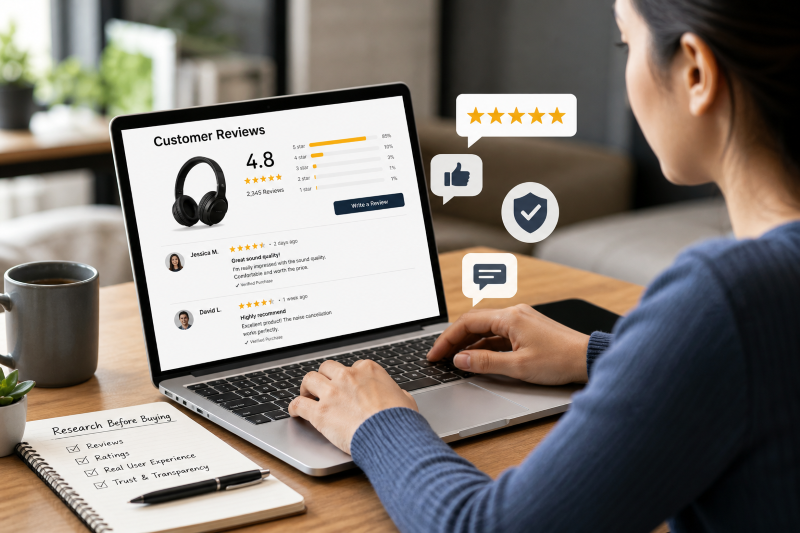
US consumers are no longer chasing the dopamine hit of a viral shopping trend. They are abandoning the ‘Buy Now Button,’ which was once a compelling charm in their shopping.
Most importantly, they are shopping for certainty, not the illusion of what popularized the one-click purchase during the digital-first dominance for many years. So, instead of clinging to nostalgia, they are choosing verification, either through the opinions of others or turning to credible online reviews to guide their buying decisions.
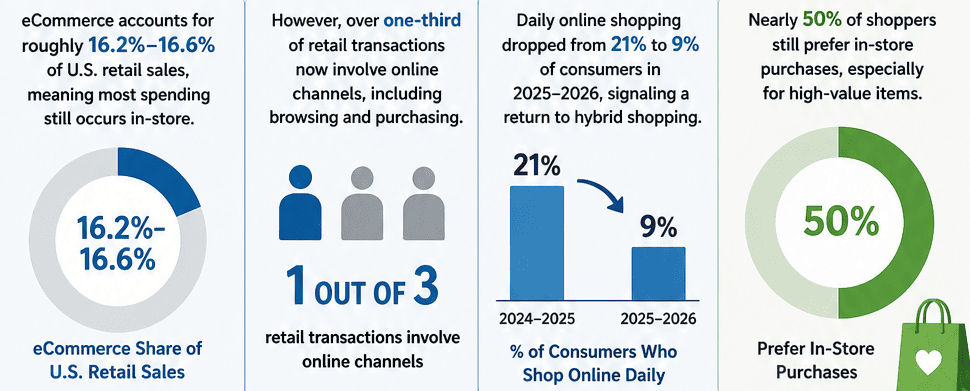
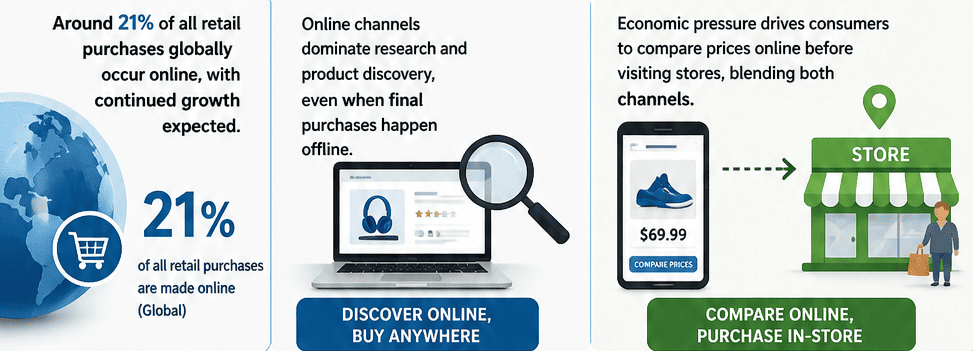
According to the findings by Salsify, a product management firm, in its survey of nearly 3,000 shoppers across the US, the UK, and Canada, consumers today rarely make a purchase without verifying the authenticity of the sale prices, quality, and other details. The data reflects the growing mindset of shoppers focusing on reducing the risk of a bad purchase by taking a deeper analysis of more details, comparison across channels, and also heading back to physical stores to confirm quality, fix, texture, and authenticity of a product.
How Does the Role of Reviews Matter for Buyers before Making a Purchase Decision?
In the context of consumer review trends in the U.S., American shoppers are stepping away from the grandeur of online shopping. They are heading for verification. For them, reviews are the source beyond being a helpful parameter of their buying journey. They are decision-influencers by way of enabling them to be informed, more skeptical, and more selective than ever before. Well, it doesn't mean to say that the role of traditional advertising has lost its value, but peer verification does carry far-reaching impacts.
To understand it better, a glowing marketing campaign can hold your attention, but authentic customer feedback lays the groundwork for determining your final move to the checkout. The shift of American shoppers moving toward credible reviews to base their buying decisions has been pivotal in transforming how brands build trust.
For example, apart from being judged solely by product quality or pricing, today's businesses are evaluated from the standpoint of how people perceive them, according to their experience. And it is essentially paving the path for building the online reputation of these businesses. For American consumers, reviews are often the final decision-making factor before they spend money on shopping for a product. It also means to say that reviews, if coming from the right source, carry the galvanic factor to influence the decisions of shoppers, helping them decide whether to buy from a store or stay away.
|
Generation |
Key Behavior / Insight |
Supporting Data / Statistics |
What It Indicates |
|
Gen Z |
Uses social media for shopping inspiration |
97% |
Strong blend of entertainment and commerce |
|
Gen Z |
Prefers mobile shopping apps |
68% |
App-first, mobile-centric behavior |
|
Gen Z |
Shops via social commerce platforms |
3× more likely |
High influence of platforms like TikTok & Instagram |
|
Millennials |
Largest online spending group (U.S.) |
36% of eCommerce sales |
Dominates digital purchasing power |
|
Millennials |
Engages with loyalty programs |
2× more likely than older generations |
Values rewards and brand relationships |
|
Gen X |
Highest average order value (AOV) |
Highest among all generations |
Spends more per transaction |
|
Baby Boomers |
Contribution to eCommerce spending |
20%+ |
Significant despite lower digital adoption |
|
Older Generations (Gen X & Boomers) |
Prefer desktop for high-value purchases |
Qualitative trend |
Trust, familiarity, and usability drive behavior |
Source: sqmagazine.co.uk
Reasons Why Consumer Reviews are Key Touchpoints for the U.S. Buyers to Make an Informed Purchase Decision
- Brand-curated messages are no longer trusted as they are mostly designed to improve the purchase counts of a product or a service, not to genuinely help customers make informed purchase decisions. That's why customers in the US are trusting verified, peer-reviewed feedback.
- Today's consumers trust experiential accounts of other customers related to a specific product or service. Such reviews from real people are honest and more trustworthy compared to misleading online advertising.
- According to PowerReviews, 86% of consumers hesitate to purchase products online without reviewing first. In addition, 96% of shoppers look for negative reviews to make a balanced perspective on a brand. This shows why consumer reviews are valuable touchpoints for online shoppers in the US to make informed purchase decisions.
- Reassurance of buying a product also comes when consumers see that other people have also bought the same product. Behavioral observance of this kind makes them confident that they are making a safe buying choice.
- Picture or video-supported reviews carry strong trust factors for consumers, helping them verify whether a product is worth buying. In fact, a comprehensive pictorial review revealing the pros and cons of a product enables consumers to make a very informed buying choice, and more confidently.
- The US consumers also rely on consumer reviews, considering inflation, to ensure every dollar is well spent.
What Matters Most for Consumers Before Making a Purchase Decision?
To be very specific in answering what matters most for consumers before making a purchase decision is word of mouth, according to this source.
Word of mouth simply means when you come across a product's quality from another buyer. It's like John extolling a brand new refrigerator he bought at Walmart to Martha, and Martha then considering buying it. The power of word of mouth can be understood with the fact that 88% of consumers in 40,000 surveyed across 56 countries said that they trust recommendations coming from someone they know, above all other forms of marketing messaging. Not only this, word of mouth is said to be the most convincing form of marketing by 65% of marketing executives. On the other hand, it is proven to be nearly 10 times more effective than paid ads, based on a BCG (Boston Consulting Group) report.
How Is Consumer Trust Measured?
Consumer trust is a valuable yardstick to better understand the level of optimism consumers have, according to their financial prospects and the status of the economy, like inflation and other factors. Therefore, consumer trust is measured based on buyers’ perceptions and opinion surveys, though there is no universal measure for it, as every country has its own indicator.
For example, if you ask how consumer trust is measured in the US, it involves large-scale surveys, sentiment analysis, and behavioral metrics of consumers, along with other specialised indices. The conclusion of consumer trust is made based on factors such as the competence of a brand to deliver on its promises, the consistency of service quality over time, the integrity in terms of high ethical standards, and transparency in terms of a brand’s openness and empathy.
What Exactly Buyers Trust Before Spending?
Based on our discussion so far, it is clear that online shoppers are virtually done with trusting the online reputation of a brand until they make sure of it using verified reviews and also word-of-mouth recommendations. In addition, here are some factors that buyers mostly trust before spending.
Quality And Reliability Of A Brand
The power of a brand trust is such that it has the sheer gravity of influencing a buyer's spending nature. As per Salsify, 68% of shoppers tend to shop more because of their trust in a brand. It should be noted that the brand trust is built on different metrics, including product quality and the value it creates for consumers, something that essentially grounds the building of a brand over time.
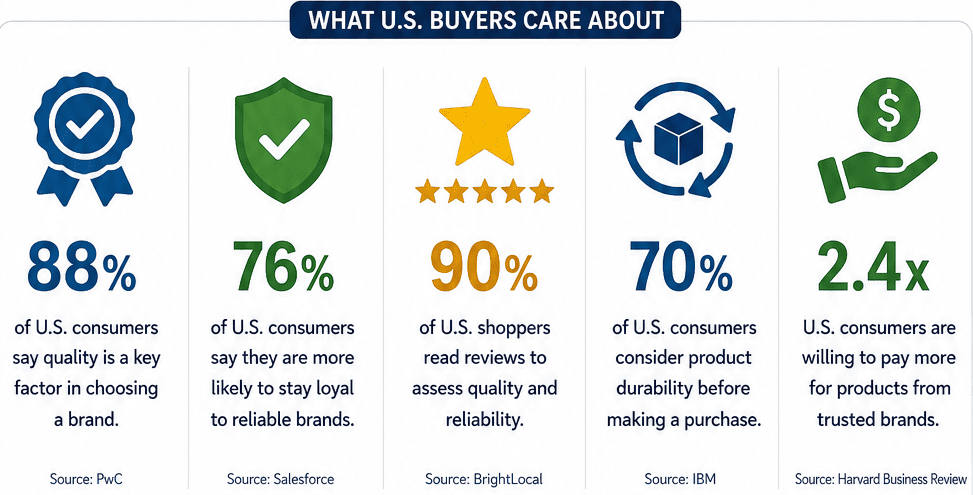
- Trust is a safety mechanism for consumers against wasting money on a faulty product. It assures that the product they are buying will meet their expectations.
- Trust is also proof that a product will work as advertised and will pan out as long-term value over time, even if the initial cost is slightly higher.
- Brand trust built on consistency and reputation over time builds confidence in consumers that doing business with it will serve them better.
Brand Transparency And Ethics
Though brand transparency can't guarantee an actual engagement of consumers with a company, it is, however, a non-negotiable factor for modern consumers. Transparency and ethical practices of a brand build long-term confidence and trust among potential customers. However, building such credibility is not an overnight accomplishment for any company.
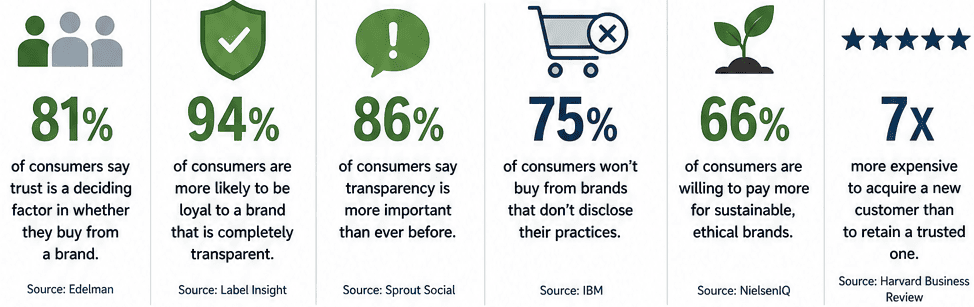
A visual guide of why transparency and ethics matter
- Transparency of a brand is a signal to buyers that a product they buy from a company will justify the money spent. It rules out any scope of getting an inferior product.
- A brand that consistently maintains transparency and ethical practices is trusted by consumers.
- Transparency of a brand is also proof that the quality of its product is not a hype but reality, hence enhancing trust among buyers.
The Rising Trend of Phygital Shopping
For the cost-conscious US consumers, in-store technology is central to validating their purchases in real time and carefully analysing their cart before checkout. Also, consumers are making a beeline for shopping enhanced by the power of new technology, like hand-held scanners or in-store tablets, to perform various types of shopping processes like scanning and verifying product prices, checking promotions, and making informed purchase decisions on the spot.
- Phygital shopping enables consumers to make informed buying decisions on the spot.
- This shopping model allows consumers to skip shipping fees and wait times as they can easily order online and pick up items right away.
- From product details to reviews and styling tips, consumers get a better in-store experience.
Final Words
The US consumer review trends are insightful, showcasing behavioral and preferential changes of American shoppers, and how certain they prioritise their shopping based on a host of quality metrics. However, no matter how they conduct their shopping, it is worth noting that their buying preferences or behaviours are largely influenced by peer-reviewed feedback. They also go for word-of-mouth recommendations, apart from factors like quality, reliability, transparency, and ethics of a brand. Overall, a clarity is panning out based on the consumer review trends, that shoppers do not blindly trust the so-called credibility of a brand unless verified and trusted.