
How Plant-Based Products Are Becoming Mainstream in the U.S.—Trends & Consumer Insights
Business to Consumer
December, 23, 2025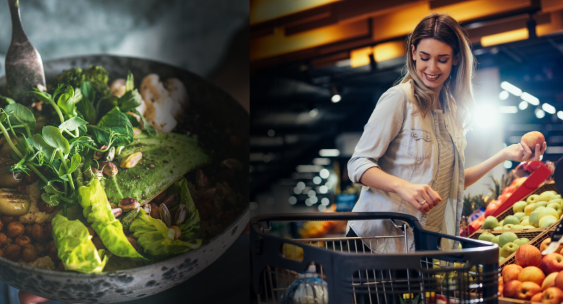
Plant-based products have undergone significant evolution in the United States, transitioning from niche health food items to everyday staples found in mainstream supermarkets, restaurants, and households. What began as options primarily for vegans and vegetarians has now captured the attention of a much broader audience, driven by concerns over health, environmental sustainability, animal welfare, and culinary innovation. As of late 2025, the U.S. retail plant-based food market remains stable at approximately $8.1 billion, a figure consistent since 2022 despite economic pressures such as inflation. This stability underscores the sector's resilience and maturation.
According to reports from the Good Food Institute (GFI) and the Plant Based Foods Association (PBFA), the plant-based market now encompasses more than 20 different categories, up from just six categories in 2018. There are different forecasts regarding the market size; some of them predict a rise in the market value to about $26-27 billion by 2033, corresponding to a compound annual growth rate (CAGR) of 11-12%. The shift to mainstream acceptance is mainly driven by flexitarians, who are people who prefer plant-based foods but consume animal products on occasion. There are size estimates that range from 20-40% of the U.S. population identifying as flexitarian or significantly cutting down on meat consumption, thus outnumbering the 2-3% of people who are strictly vegan by a wide margin.
This piece of content brings to light the prevailing marketplace situations, the very intricate consumer behaviors, the major factors that drive the adoption, the challenges still existing, the innovations that are coming up, and the forecast for 2026 and beyond, thus showing that plant-based products have become a very significant part of the American food landscape.
Market Trends and Growth
The American plant-based food industry has demonstrated remarkable resilience. Sales, which were originally very high in the early 2020s, later on became stable at $8.1 billion for the year 2024, and the same trend was witnessed through 2025. The plateau that was established is an economic reflection rather than a decrease in interest: there was no change in unit sales while the dollar sales went slightly up, owing to the price increases that have been there. Plant-based milk remains the market leader, accounting for a significant share, followed by meat alternatives, which have experienced a rollercoaster ride in their market but are gaining traction in certain areas.
It is mainly the categories of dairy alternatives (especially oat and almond milks), functional snacks, and protein-enriched products that are lifting the plant-based market. Like the plant-based meat market, which had sales of around $3.2 billion in 2024, some estimates predict a CAGR of 18% through 2030 for the market, still to be driven by better formulations. Product diversification is a sign of maturing: there are now yogurt, cheese, ice cream, eggs, seafood, and even fusion products blending plant and animal proteins in the market.
Integration in the food service industry has been a significant factor in the acceptance of plant-based diets by the general public. Major quick-service restaurant (QSR) chains, such as McDonald's (McPlant) and Burger King (Impossible Whopper), as well as several KFC trials, will have plant-based options available on their menus, accounting for over 80% by 2025. In addition to this, retail giants such as Walmart and Kroger have not only introduced dedicated sections but also expanded their e-commerce operations, which account for a larger percentage of the sales.
The trends expected to emerge in 2025-2026 are a combination of clean labels, whole-food ingredients, and the provision of functional benefits, such as high protein or gut health. Pea protein remains the dominant ingredient, but other ingredients, such as fava beans, lentils, mushrooms, and nuts (e.g., pistachio milk), are also gaining popularity. Blending plant-based ingredients with a small amount of animal protein for the sake of taste and nutrition is a growing trend in hybrid products, which will appeal to flexitarians seeking a middle ground.
The growth of private labels has been remarkable. Their price tag has made these products more accessible, thereby creating a broader market for plant-based products.
Consumer Insights:
Consumer behavior signals the plant-based revolution as a widespread and deep-rooted one. It looks as if the lazy US consumers have got the plants right around the corner, with about 60-70% of households buying plant-based products on a more or less regular basis, and the purchasing rates being relatively high, around 80%. The leading reason is health, as 50 to 65% of consumers mentioned it, and that is inclusive of the benefits of weight control, less risk of chronic diseases, and improved digestion. Environmental issues are coming second, as 40-50% are talking about smaller carbon footprints, while animal welfare is coming up with fewer but a stricter committed group that is still at the back of the line as a reason for buying meat alternatives.
Flexitarianism is bulging out everywhere. The diehard vegetarians are estimated to comprise 2-3% of the population. In contrast, flexitarians, who consistently reduce their meat consumption, are estimated to be between 20% and 47%, depending on how the surveys are defined. The youth is the driving force behind this movement, as 50-60% of Gen Z and millennials are either interested in or have adopted the lifestyle, and in many cases, they are choosing the alignment of their choices with their personal values. The buyer profile is mainly comprised of women living in cities of suburbs with a higher income bracket, and they are health-conscious of women living in cities or suburbs with a higher income bracket, and they are health-conscious.
There has been a considerable improvement in taste perceptions, and with the advancement in formulations, satisfaction has also increased. Nevertheless, there are still some barriers: price premiums (plant-based products are usually 2 to 4 times more expensive per unit than traditional ones), the concept of ultra-processing, and, occasionally, mismatches in taste and texture. In 2025, surveys indicated that artificial ingredients were becoming one of the main concerns; therefore, there was an increase in demand for "cleaner" products made from whole plants that consumers could recognize.
It is worth mentioning that a large number of consumers have started to prefer separate plant-based products (for instance, vegetable-based dishes) rather than meat/dairy alternatives. This trend signifies the quest for authenticity and diversity rather than an aspiration for perfect imitations. Wellness-oriented consumers are attracted to functional trends, such as protein-rich drinks or mushroom-infused snacks.
Drivers of Mainstream Adoption:
Multiple interconnected factors have propelled plant-based products into the mainstream:
Health Awareness: Growing evidence linking plant-heavy diets to lower risks of heart disease, diabetes, and obesity. Functional innovations (e.g., added probiotics or proteins) attract non-vegans.
Sustainability and Climate Concerns: The environmental impact of livestock, which accounts for significant greenhouse gas emissions and resource use, drives choices, especially among younger consumers influenced by media and education.
Technological Innovation: Advances in texture, flavor, and nutrition parity, including precision fermentation for dairy-like proteins and whole-cut mimics.
Flexitarian Appeal: The non-restrictive nature allows gradual, sustainable changes without full commitment.
Increased Accessibility: Widespread retail placement, food service menus, celebrity endorsements, and influencer marketing normalize options.
Policy and Cultural Shifts: Dietary guidelines emphasizing plant-based foods, school programs, and corporate sustainability goals reinforce adoption.
Media exposure, from documentaries to social media, has amplified awareness, making plant-based eating a cultural conversation rather than a fringe choice.
Challenges and Opportunities:
Progress has been made, but still, challenges exist. Among the many economic pressures, price sensitivity is one of the main factors that is leading many consumers back to the less expensive animal products. Over-processing and "artificiality" perceptions are turning some consumers away, leading to a negative response towards highly engineered mimics. The sluggishness of specific categories, particularly meat alternatives, is evident due to saturation and competition from booming conventional sales.
However, there is a big opportunity for clever companies. Clean-label, minimally processed products made from whole ingredients (e.g., hamburgers made from beans or nut milks) meet the demand for authenticity. Hybrids are the solution for consumers who are waiting. Consumers in the flexitarian group can be easily reached by providing them with easy, tasty, and affordable options, especially snacks and drink options.
Innovative ingredients such as fungi, seaweed, and upcycled materials can facilitate sustainability and novelty. Policy support, for instance, a domestic bio-manufacturing incentive, may result in cost reduction. As consumers start to see plant-based products more and more as "good for you as well as the planet," brands that focus on being transparent and delivering tangible benefits will be the ones to win.
Future Outlook:
In 2026 and beyond, plant-based products are projected to regain center stage, thanks to innovations addressing long-standing barriers. With stabilization turning to focused expansion, the sector could increase its share in a maturing market. The flexitarians will remain the main face of growth, with the input of the new generation and the changing culture being the two major factors driving their growth.
The forecasts indicate that there will be continuous double-digit CAGRs in some segments, which may eventually lead the overall market to reach $15-20 billion domestically by 2030. The ultimate factor in determining success will be the combination of price, taste, and positioning, where the product transitions from being an "alternative" to a "celebrated food" that is recognized and appreciated on its own.
Conclusion
By late 2025, plant-based products will have undoubtedly gone mainstream in the U.S., becoming an integral part of daily eating habits across all demographics. No longer confined to specialty aisles, they reflect evolving priorities around health, sustainability, and enjoyment. Driven by flexitarians and bolstered by innovation, the category has weathered challenges to emerge stronger and more diverse. As barriers like price and perception diminish through continued advancement, plant-based foods are set to play an even larger role on the American plate—proving that this shift is not a fleeting trend but a fundamental evolution in how we eat.