
Top Interior Design Trends 2026 USA: Warm, Collected Spaces and the Designers Shaping Them
Business to Consumer
January, 14, 2026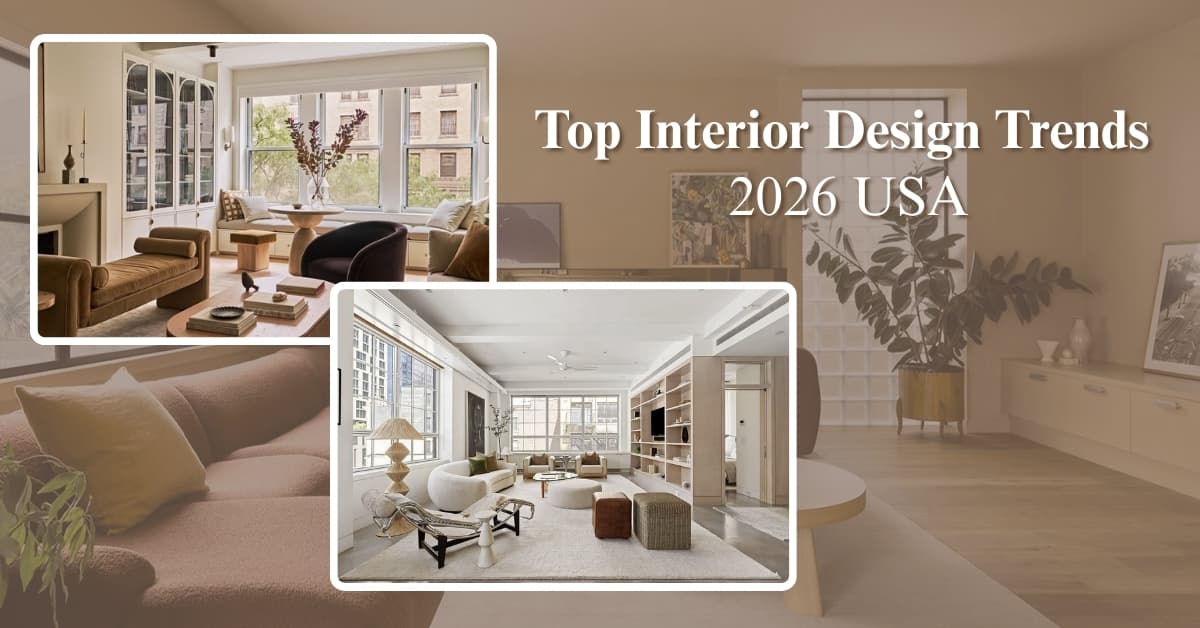
Interior design in the United States is entering a deeply human phase in 2026. After years dominated by ultra-minimalism, cool grays, and Instagram-perfect spaces, American homes are shifting toward something more emotional, layered, and personal. The defining idea of 2026 interiors is warm, collected spaces—homes that feel assembled over time rather than styled all at once, spaces that prioritize comfort, memory, texture, and individuality.
This shift reflects larger cultural changes. People are spending more time at home, working from home, entertaining in smaller circles, and seeking environments that support well-being rather than visual perfection. The result is an interior design movement that values richness over restraint, character over coordination, and lived experience over trends that look good only on screens.
Below is a comprehensive look at the most important interior design trends shaping American homes in 2026—and the design philosophy driving them.
The Rise of Warm, Collected Living
2026's primary design philosophy is the conviction that a house should give the impression of being collected, rather than being curated. In contrast to rooms that look like they have been designed in an instant, spaces now reveal the character of living, traveling, changing, and personal taste for many years. Perfectly matching furniture is not a requirement anymore. The use of the same materials is not a requirement either. What is important is to achieve unity between feelings and not through style.
The predominant characteristic of collected interior design is that it always comes up with the mixing of the old and new, high-end and accessible materials, as well as various periods of design. A modern sofa may be placed near a side table, rubbing shoulders with its vintage counterpart. Handcrafted pots might be right next to pieces of contemporary art. Such juxtapositions give rise to houses that are not only real but also very private and thus, not at all like they were put on display.
Apart from that, the method can also be considered as a reaction to the disillusionment with the quick trend transitions. Rather than fast-forwarding and making alterations in accordance with what is “in” at the moment, the owner is selecting his/her favorite pieces, then gradually assembling around them, which results in interiors that appear to be anchored and thus, not easily outdated.
Minimalism Evolves Into Soft Maximalism
Minimalism is not going to vanish in 2026—it is just going through a change. The previous years' strict, empty, very much regulated minimalism is making room for soft maximalism. This new style is very much like the old one, where clean lines and careful editing are the main features, but color, texture, pattern, and decoration are the newcomers.
The spaces still have a purpose, but they are not as bare as before. There are books and objects on the shelves. Walls are decorated with art of emotional value. Textiles are laid one on top of the other. The aim is to find a middle ground: areas that are full and warm without being too much.
Soft maximalism offers the chance to present one's character without losing its peacefulness. It fosters the diversity of visuals while unifying the overall atmosphere, making it increasingly attractive for daily living.
Color Palettes Shift Toward Depth and Warmth
Color selection has a significant influence on the interior design of 2026. Over time, cool whites, icy grays, and flat neutrals have given way to bright and warm tones that not only decorate but also show the moods of the residents using the space.
- Some of the main color directions are:
- Browns like espresso, chocolate, and tobacco
- Greens like olive, sage, moss, and forest
- Color ranges from terracotta to clay, rust, and muted ochres.
- Dusty jewel tones of deep plum, muted teal, and softened burgundy
In most cases, these colors are applied to walls, cabinetry, upholstery, and even ceilings, thus forming immersive environments rather than applying accent-based schemes. The focus is on the shades that undergo the least visible changes from aging, are able to cope with different lighting conditions, and give a feeling of being close to nature.
Neutral color schemes are still around, but they are "warmer" now. The beige, greige, and off-white shades have become "creamy" and "sun-baked" rather than "cool" and "flat."
Texture Becomes the New Luxury
In 2026, luxury is no longer defined by shine or polish. Instead, it’s defined by texture and tactility. People want interiors that feel good to touch and experience, not just admire visually.
Materials gaining prominence include:
- Limewash and plaster walls
- Natural stone with visible veining
- Raw and reclaimed wood
- Bouclé, wool, mohair, and linen upholstery
- Handwoven rugs and textiles
These materials add depth and warmth while softening acoustics and light. Texture also brings a sense of craftsmanship and authenticity, making spaces feel more human and less manufactured.
This focus on tactile design aligns with a growing interest in sensory well-being—how homes support calm, comfort, and emotional regulation through material choices.
Walls Become Active Design Elements
By the year 2026, walls will no longer be passive and will only serve as a background. They have become active participants in both mood and storytelling. Paint is still there, but it is increasingly being joined by wallpaper, murals, textured finishes, and layered treatments.
The main wall trends are:
- Wallpaper containing depth ranging from faux plaster, fabric textures, and painterly patterns
- Print layering mixing subtle patterns instead of depending on bold feature walls
- Wall and ceiling treatments using wallpaper or color to achieve intimacy
- Trompe l’oeil effects that create interest with no mess
All of these techniques allow homeowners to be creative and achieve a unified overall effect in their house. Walls transform from mere furniture frames into an integral part of the home narrative.
Ornamentation and Detail Make a Comeback
After a long period of minimalist interiors, decorative elements are making a comeback—carefully and in limited numbers. Trims, tassels, fringe, cording, and other decorative finishes are making a comeback, but in a subtle and contemporary manner.
Designers are no longer hiding behind ornament but instead are showcasing the details:
- A lampshade with fringe
- Drapery panels with trim
- Cushions with cord or upholstered furniture
- Hardware with a decorative finish that has a touch of aging
These details contribute to the creation of an inviting and enchanting atmosphere by making modern interiors less stark and more sophisticated in terms of layers. Ornamentation in 2026 is all about subtlety and richness, not overpowering.
Kitchens Turn Moodier and More Inviting
Kitchens remain the center of American houses, and the 2026 ones show the same trend of going for warmth and character in general. The ultra-modern kitchen painted entirely in bright white is now a thing of the past and has been replaced by more sociable, earthy, and cozy environments.
The most important things in kitchen trends are:
- Warm-painted cabinets of beige, taupe, olive, and dark green
- Natural wood with grain showing
- Stone with movement and texture
- Combination of metals and antique finishes
- Lighting that is not too bright, but just enough to keep people around
Even the most practical kitchens now enhance the atmosphere first. They are meant to be cooking, talking, connecting, and living places all at once.
Furniture Feels Softer and More Relaxed
Comfort and friendliness are the main features of furniture in 2026. Rigid shapes and sharp corners all over the furniture world are giving way to more gentle and curvy designs, soft and round corners, and the relaxed sizes of the pieces.
The following are the typical features:
- Very spacious seats along with very thick cushions
- Sofas and chairs with curves
- Textured upholstery that can be felt on the surface of the furniture
Furniture that is created in such a way that it is for the users who like to lounge, rather than for the users who maintain a formal posture.
The change points out people's need for places where taking naps or just being lazy is easy and natural. Furniture is intended for use, living, and having fun—not for keeping and preserving.
Sustainability Through Longevity, Not Labels
Sustainability remains important in 2026, but the focus is shifting. Rather than chasing eco-labels or trend-based sustainability, homeowners are embracing longevity as sustainability.
This means:
- Choosing high-quality pieces meant to last decades
- Investing in timeless materials rather than disposable finishes
- Reusing and repurposing existing furniture
- Supporting craftsmanship and repair over replacement
The collected-home philosophy naturally supports this mindset. When homes are built slowly and thoughtfully, they become more sustainable by default.
Top Interior Designers Influencing U.S. Design Trends in 2026
1. Kelly Wearstler
The visionary designer is credited with asserting a new meaning to the concept of American luxury through boldness in materials, sculptural forms, and rich layering. Vintage references together with artisanal details and contemporary drama are major characteristics of her creations, which decidedly drive the interior trend of expressive and collected spaces.
2. Studio McGee (Shea McGee)
A very influential designer who has played a significant role in reshaping the mainstream American interiors, mainly towards the direction of warm neutrals, elegant and welcoming homes, and ones that have the look of being curated over a period of time instead of all done at once.
3. Studio Shamshiri
A very significant contributor to the development of layered, narrative-driven interiors that combine historical references with modern-day sensibilities. The firm’s work comes to life through the “collected, not coordinated” philosophy of design.
4. Amber Lewis
Amber Lewis is one of the major experts in the field of casual, California-like interiors, where the use of natural, vintage, and classic materials in combination is done in such a way as to create not only warmth but also softness and imperfection, which has led to its widespread acceptance across the country.
5. Jake Arnold
English-style warmth, along with decorative detailing in modern American homes and the return of classic silhouettes, are his driving forces. His talent creates a harmonious coexistence of custom and modernity, thus influencing not only the younger designers but also the luxury residential projects.
6. Young Huh
The artist is famous for the integration of super chic modernism with luscious textures, ornaments, and discreet drama. The spaces she creates reveal the partnership between the extremes of detail and softness, as well as contemporary architecture.
7. Peter Dunham
He is a very influential figure in American design for age and longevity, especially in the areas of patterns, colors, and global connotations that have been revived. The artist's work forecasted the 2026 switch to expressive and personality-driven interiors.
8. Roman and Williams
The duo has been instrumental in creating immersive, atmospheric interiors, with their hallmark being craftsmanship, patina, and emotional connection. Their presence can be felt in the design of hotels and residences.
9. Jeremiah Brent
Warm modernism, layered textures, and personal storytelling are his tools of the trade through which he reaches out and provides the contemporary consumer with an interior that is at once polished and intimate.
10. Olga Ashby
Olga Ashby is the designer to watch in U.S. luxury interiors, who is becoming more and more influential; her signature style consists of sophisticated layering, tactile materials, and curated eclecticism that is closely connected with 2026’s collected aesthetic.
Emerging & Next-Generation Designers to Watch (2026)
- Athena Calderone – refined minimalism evolving into warm, material-forward spaces.
- Colin King – master of restraint and object curation, influencing how homes are styled
- Vicky Charles – residential work emphasizing understated luxury and emotional depth
- Jessica Helgerson – nature-driven interiors rooted in place and craftsmanship
How to Create Your Warm, Collected Space:
You do not have to renovate completely to accept the indoor design of 2026. Just a few deliberate modifications can greatly alter the atmosphere of the area.
The journey begins by bringing in the warm colors—replace the cooler shades with the warmer neutrals or with the darker hues. Create an interesting ambiance by using textiles, rugs, or wall finishes. Install lights that give a soft glow instead of bright lights that might be too much. Above all, choose items that mean something to you: art, objects, furniture, or materials that reflect who you are.
The objective is not to be the first one to go with every trend. It is to have a house that feels layered, warm, and unmistakably yours.
Final Thoughts
Interior design in the USA in 2026 is less about making a statement and more about creating a sense of belonging. Warm, collected spaces reflect a cultural desire for authenticity, comfort, and emotional connection. Homes are becoming richer, softer, and more personal—places where life unfolds naturally rather than perfectly.
As trends continue to evolve, one idea stands out clearly: the most beautiful homes are the ones that feel lived in, loved, and uniquely human.