
Used Car Parts Industry in the US: Growth, Trends, Opportunities 2026
Business to Consumer
May, 1, 2026
America is a country where transportation considerably drains people’s savings. For example, it consumes nearly $12k of the average household's budget in a year! This is why, for most Americans, switching to used auto parts is not a preference, it is a NEED. Because the necessity of shifting to more affordable and quality used auto parts becomes a cost-effective alternative when unexpected repair costs severely impact budgets.
The Used Auto Parts Ecosystem In The US: Market Size, Trends & Forecast (2026–2030)
The United States is home to one of the world’s largest used auto parts markets. Although it was once a fragmented network of salvage yards, it is now evolving into an aftermarket ecosystem serving as an entry point for the country’s citizens to access new replacement parts for both DIY consumers and professional repair shops.
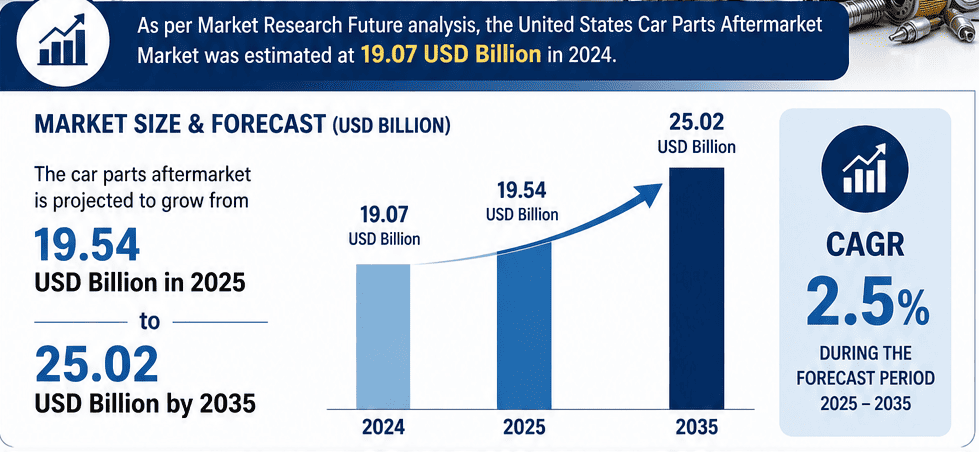
According to Market Research Future, the U.S. Automotive Aftermarket is likely to grow from $19.54 billion in 2025 to $25.02 billion by 2035, signifying a compound annual growth rate (CAGR) of 2.5% during the forecast period. A growth rate of this pace is what keeps on creating opportunities for the used auto parts industry.
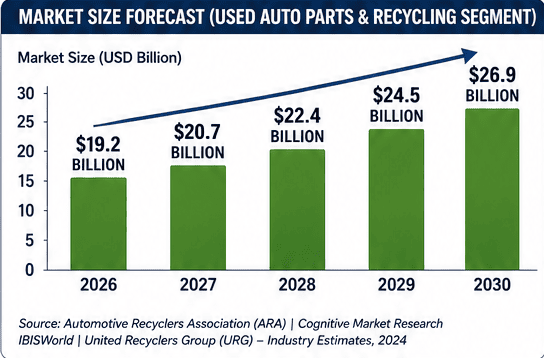
Industry analysts estimate that the U.S. used auto parts and recycling segment is likely to grow beyond $27 billion by 2030. Key growth drivers are both retail consumers and commercial buyers, including repair shops, insurers, and collision centers.
Soaring Automotive Landscape: Why Americans are Switching to Used Auto Parts?
Financial Obligations
Imagine your 8-year-old SUV giving you a depressing clunk, and your mechanic is telling you that a new replacement transmission will cost you over $4000! While very shocking to witness this, it is a common incident most Americans have to go through once, twice, or several times in their lives. The bottom line is that most citizens can't afford this exorbitant replacement, and therefore, they naturally turn to alternative solutions called used auto parts.
|
Cost Factor |
New OEM Parts |
Used OEM Parts |
Typical Savings |
Why Americans Choose Used |
|
Alternator Replacement |
$400–$600 |
$100–$200 |
60%–75% |
Ideal for older vehicles where a new alternator may not be financially sensible. |
|
Transmission Replacement |
$4,000–$7,000 |
$1,500–$3,000 |
50%–65% |
Can save a vehicle from being declared a total loss. |
|
Engine Replacement |
$5,000–$10,000 |
$2,000–$4,500 |
45%–70% |
Makes major repairs economically viable. |
|
Body Panels (Doors, Fenders, Bumpers) |
$800–$2,500 |
$250–$900 |
50%–70% |
Especially popular for collision repairs and insurance claims. |
|
Headlight Assemblies |
$800–$2,000 |
$250–$700 |
55%–70% |
Advanced lighting systems have become extremely expensive. |
|
Average Overall Savings |
— |
— |
Around 55% |
The primary reason most consumers switch to used parts. |
Note: The data insights may vary. Please consult more sources for deeper analysis.
No doubt, it is the cost that matters, because used auto parts save megabucks by costing you 50% to 80% less than new ones. For example, buying a brand new alternator for a mid-size sedan from a dealership could cost in the range of $500, but a used one from a junkyard or salvage yard would cost $100-$200. As stated before, for many Americans, switching to used auto parts is a need rather than a preference.
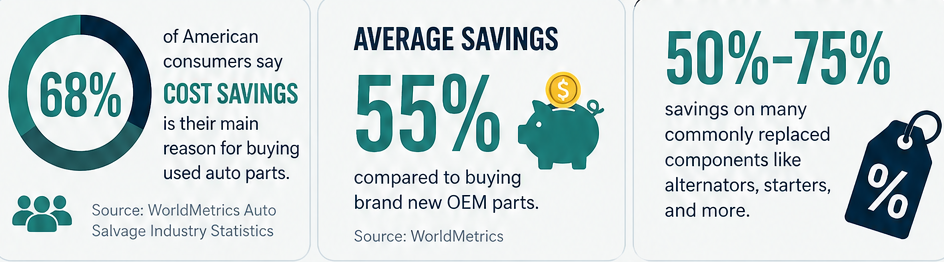
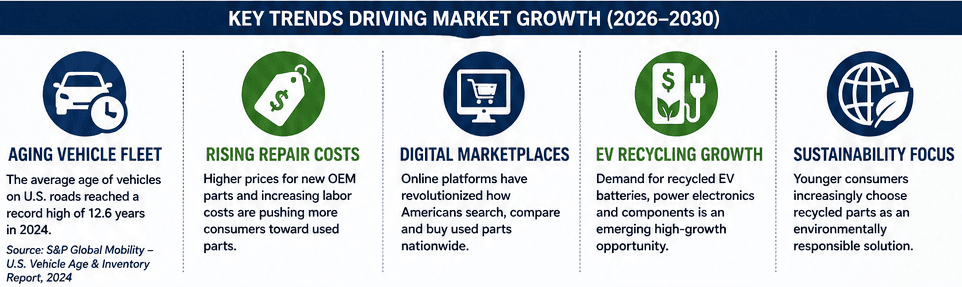
What worsens the situation is economic uncertainty, like inflation or interest rates hovering around 7% to 8%, forcing Americans to keep their vehicles longer. The average age of the old cars in the country is now past 12 years, compared to 11 years a decade ago. Americans with lower-income families, where DIY (do-it-yourself) repairs are the order of the day, find used parts a viable working solution. In fact, price is the single most key factor influencing the buying decision of nearly 60% of auto-part buyers in the US. To say otherwise, used car parts allow Americans to drive on the road affordably.
Environmental Awareness
For younger Americans like Millennials and Gen-Z, sustainability is a mainstream priority, not a niche concern. Manufacturing new auto parts consumes vast resources, including mining metals and burning energy, let alone emitting greenhouse gases.
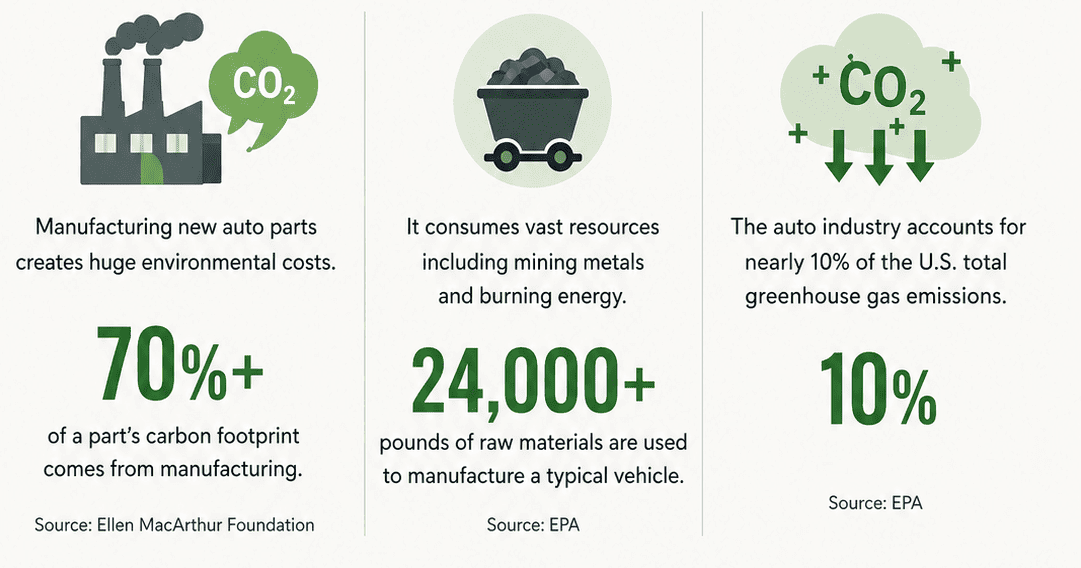
Used parts, by contrast, are a form of recycling. So, keeping the used parts or components that are in working condition is environmentally friendly by reducing the need for new production. In a country where 12 million vehicles are scrapped annually, reusing functional parts is an environmental victory.
Quality and Trust
The mockery that used auto parts are "junk" is fading away fast. Renowned suppliers test and certify the performance quality of these components, mostly OEM parts made by the same brands, which are salvaged from vehicles with relatively lower mileage. For example, a second-hand engine with nearly 30,000 miles can reliably last for another 100,000 miles or more. Also, used components come with warranties of 30-90 days, though buyers are advised to evaluate the component's origin, condition, and seller's reputation, like verifying certified recyclers and online ratings.
The DIY Spirit and Local Economics
America has a flourishing DIY culture. Whether it is a rural garage in Iowa or an urban workshop in Brooklyn, America's love for hands-on problem-solving is well known. As self-explanatory as it may seem, people in lower-income groups usually prefer used parts to avoid high mechanic costs. People's dependency on local salvage yards is very strong. In fact, these salvage yards are even job creators for dismantling, inspection, and selling parts, strengthening the local economy in the process. Also, many Americans' sentimental values attached to their cars are also a contributor to flourishing the DIY culture. Fans of classic cars depend on used parts to save money while keeping the authenticity of their vehicles intact. Americans in Southern California literally believe that used parts are ingredients for passion projects.
Technology and Trends
The market for used car parts is now technologically driven. Today's inventory systems at salvage yards allow buyers to trace the origin of specific components. Online platforms use algorithms to match sellers and buyers for parts.
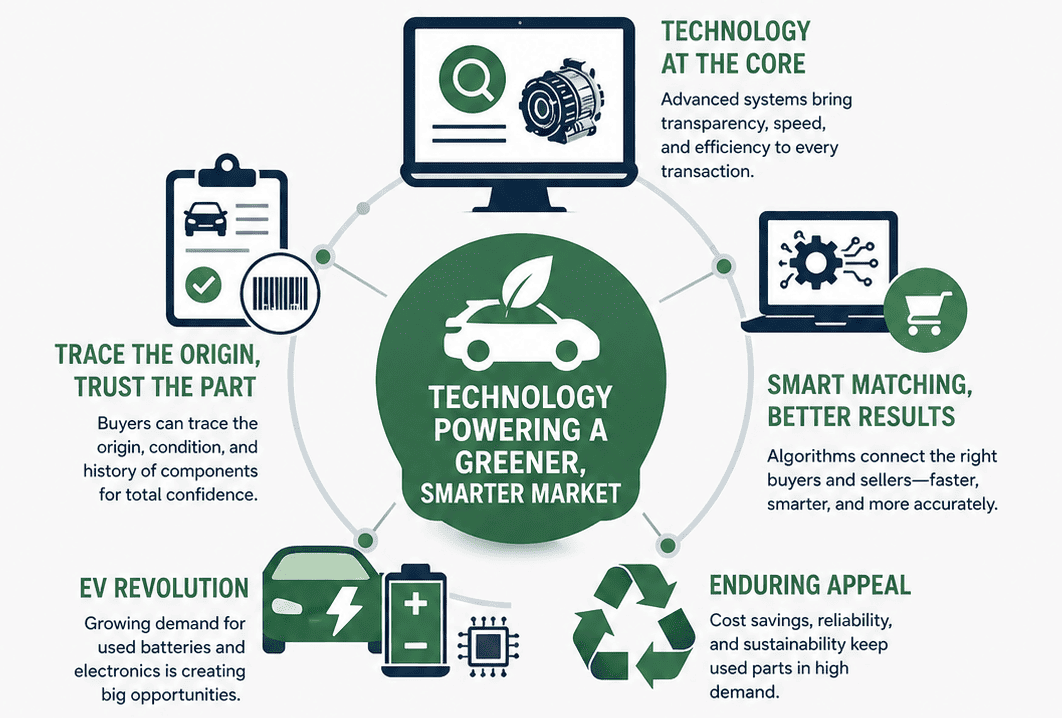
As the EV (electric vehicle) is becoming a mainstream priority, the market of used batteries and electronics is growing steadily. The enduring appeal of used components is what drives the trend and market.
Insights Into the Rising Auto Repair Costs, and How Used Auto Components Save Money
According to a report by CBS News, car owners across South Florida are feeling the heat of soaring repair bills, as the costs of even routine maintenance like oil changes are exorbitant. It says a brand new transmission for a 2019 Ford Ranger costs $8,500! "That's a lot of money!" said a miffed observer. And to add fuel to the fire, the industry experts and shop owners are warning that the trend is not likely to cease anytime soon.
|
Repair Category |
Average Cost Using New Parts |
Average Cost Using Used Parts |
Potential Savings |
Typical Savings (%) |
|
Engine Replacement |
$6,000–$10,000 |
$2,500–$4,500 |
Up to $5,500 |
45%–70% |
|
Transmission Replacement |
$4,000–$7,500 |
$1,500–$3,000 |
Up to $4,500 |
50%–65% |
|
Alternator Replacement |
$500–$800 |
$150–$300 |
Up to $500 |
60%–75% |
|
Starter Motor Replacement |
$400–$700 |
$100–$250 |
Up to $450 |
55%–70% |
|
Headlight Assembly (LED/HID) |
$1,000–$2,500 |
$300–$800 |
Up to $1,700 |
60%–75% |
|
Bumper Replacement |
$1,200–$3,500 |
$400–$1,200 |
Up to $2,300 |
50%–70% |
|
Door Replacement |
$1,500–$4,000 |
$500–$1,500 |
Up to $2,500 |
55%–70% |
|
Suspension Components |
$800–$2,000 |
$300–$900 |
Up to $1,100 |
45%–65% |
Note: The data insights may vary. Please consult more sources for deeper analysis.
The cost of repairing vehicles has taken an upward turn over the past decades in the US. The replacement costs appear to be going downhill with no hope of a positive revival soon. What drives these costs is based on how the automotive industry of the country has introduced modern cars featuring sophisticated electronics, cutting-edge driver assistance systems, lightweight materials, and complex drivetrain parts.
While these innovations undoubtedly add a significant degree of safety and performance improvements to automobiles, they also dramatically increase the replacement costs on the flip side. Even a new OEM headlight assembly would cost you thousands of dollars today. In fact, engine and transmission replacements can collectively pile pressure on your budget, even exceeding the residual value of old cars. These are some of the harsh realities compelling people to go for used auto parts to keep their repair bills manageable. It is estimated that using used auto parts helps Americans save roughly 50%-80% in contrast to the price of new OEM (original equipment manufacturer) parts.
Compelling Benefits of Used Auto Parts for Vehicles
- Save Money - This is the most immediate benefit of resorting to used auto parts. No doubt, going for new car parts for your vehicle, irrespective of the make and model, would cost you significantly more. Whether it is alternator, transmission, or body panel, the used auto repairs help you save money without sacrificing on the side of performance.
- Genuine Quality - One of the biggest upsides of used auto components is that they are usually OEM parts having factory-grade quality, longevity, and performance. For American drivers who value reliability, used OEM components often provide peace of mind compared to lower-cost aftermarket substitutes.
- Fit & Compatible - Used OEM components are known for their precise fit and compatibility, as they are originally installed by the manufacturing brands. Perfect compatibility of these used parts ensures a reduction in installation time, no fitment issues, and a lower risk for future mechanical failure.
- Best for Old Classics - Since Americans have sentimental values for their aging vehicles, used auto parts through salvage yards or online recyclers become their best options to avail components that may not be available at dealerships.
- Faster Availability - Modern technology has given rise to new changes in the used auto components market. Salvage yards and auto recyclers today are synced with inventory databases across the country, meaning buyers can trace the origin of specific parts in minutes. Besides, most components can also be made available anywhere in the country within a few days. For American and DIY enthusiasts, this level of speed and convenience is awesome, or in certain measure, better than even traditional dealership supply chains.
- Trusted Repair Option - Most insurers in the United States now routinely approve the use of recycled OEM parts. This proved beneficial for customers as they avail the used OEM parts at a lower cost and are trusted by the insurers, also reducing repair costs and speeding up claims.
- Extended Life of the Vehicle - A quality used car part can add years to a vehicle's life. Replacing a dead engine, transmission, or electronic module with a tested and certified used auto component allows owners to keep driving their old vehicle without the high cost of purchasing a new one.
- Supports Recycling Industry - The US automotive recycling industry is a sector processing millions of vehicles every year, and also gets support when consumers purchase used auto parts. This is because by choosing recycled parts, they contribute to strengthening the domestic industry that serves the purpose of sustainability and resource conservation.
- Best Value for DIY Enthusiasts - In a country where DIY (do it yourself) is a common culture, the role of used car parts is more of a precise fitment into that tradition. As a DIY enthusiast, you can avail low-cost OEM parts online or from local salvage yards, making repairs easy to afford for consumers. In addition, recycled parts also offer a great value to the hobbyists and wrench-turners (mechanics). Based on consumer behavior studies, 47% of vehicle owners now perform basic maintenance tasks themselves. The projected growth of the DIY automotive market is $12.4 billion by 2029.
Are Used Auto Parts Safe?
It is true that the stigma attached to used car parts as 'Junk' is something that many people take on face value. However, experiential use of many Americans from lower-income families is telling a rather different story, validating the authenticity of used auto parts, especially when used from renowned salvage yards selling certified used auto parts. One of the myths people often have with "used parts" is that they are "worn out" and so they are unsafe. As outlined, buying used auto parts from a trusted supplier is safe, what matters most is ensuring that the used parts are tested and do not have doubtful safety components. In short, buy used auto parts from a reputable supplier or salvage yard that inspects and tests the parts. Check the warranties provided to ensure the level of assurance on the performance of the components. Inspect the used components carefully for any sign of wear, damage, or clumsy handling or storage.
Which Used Auto Parts are Safest to Buy?
When it comes to buying safe used auto parts, fortunately, there is a wide range of categories considered very safe and recommended by wrench-turners and insurers. Some of the safest used auto parts worth considering are -
- Compressed-tested or inspected transmissions and engines.
- Body panels such as doors, hoods, and fenders
- Wheels and rims
- Interior components
- Mirror, glass, and lighting assemblies
- Electronic modules sourced from compatible vehicles
The best thing about these used auto parts is that they maintain their structural integrity and ensure extended performance as effectively as new substitutes.
Beginner's Guide to Buying Used Auto Parts In The U.S.
Buying high-quality used auto parts, which are tested for their extended performance and durability in the US, may turn out to be a herculean task if you are not aware of the necessary steps to take in this context. No doubt, uncertified used auto parts will prove counterproductive for your old car's performance, which essentially makes it more vital to buy something that is super-credible in terms of authority, quality, and quality benchmark.
Here's a step-by-step guide to buying quality used auto parts for first-time buyers in the US.
Gather key details of your vehicle
Before you search for any used auto parts, make sure you have all the key details regarding your vehicle. For example, you will need the year, make, model, trim level, engine size, and VIN (Vehicle Identification Number). Missing even a minute detail or variations between model years can lead to compatibility issues. Similarly, a single digit in the VIN can determine whether a part will dovetail perfectly or not at all. These details will make it easy for you to find used car parts matching your needs.
Shop from the trusted source
Once you have all the key details about finding used car parts matching your needs, look for a supplier that is well-established, reputable, and reviewed positively by customers. This is vital because reputation matters when searching for used auto parts that are certified and tested for their performance. And reputable stores or professional salvage yards are dependable destinations offering a wide array of inventory with detailed information about each used auto item. Also, check if the businesses are affiliated with the Automotive Recyclers Association or those offering transparent grading systems, warranties, and detailed product descriptions. Online reviews will also help you ascertain the credibility of the store or business.
Be clear about what exactly you need
Auto parts are generally available in multiple versions. Therefore, look for the ones matching your vehicle configuration. To narrow down your search, locate the OEM part number from your current component, owner’s manual, or dealership to avoid any guesswork and ensure you get a hand on the component matching your needs. This sort of compatibility is also essential for electronic modules, sensors, and control units.
Understand part grading systems
In America, many professional recyclers make use of standardized grading to show the exact working conditions of the particular used auto parts. They are graded based on their respective mileage, condition, and performance. For example, Grade A usually indicates excellent condition, Grade B indicates moderate cosmetic imperfections, and Grade C means the parts are best reserved for budget repairs or non-critical applications. Don't forget to ask for a photo and clarification about how parts are graded for better clarity.
Verify the donor vehicle
To ensure that the used auto parts you want to purchase are free from problems like whether they are from stolen vehicles or have flood damage, it is always safe to know a donor vehicle’s history. A quality and reputable seller will always provide you with this type of information, including mileage, accident history, maintenance history, and VIN. True that lower-mileage parts usually offer extended longevity, but age and maintenance history are equally important. To understand it better, if a transmission from a vehicle shows 4,000 miles rather than 140,000, that’s something you should take note of. Because 40,000 miles are indicative of the “early life” phase of the transmission, while the latter one shows that the transmission is nearing or has run out of its typical interval, where most components start to wear out.
Ask about testing and the quality-control process
Reputable and trusted recyclers are known for offering quality service regarding used auto parts in the US, as they thoroughly inspect and test parts before listing them for sale. For example, they may carry out compression tests for mechanical components and also bench-test electronic modules for performance. As a buyer, do not hesitate to ask how a specific part has gone through the quality-control process.
Always check the warranty
How will you ensure that an auto used part, such as the transmission you want to buy, will last longer? This is where warranty comes into the picture, and also a seller's integrity in telling you the exact case of it. A warranty is what gives you an indication of a seller's confidence in the quality and durability of its products. Professional recyclers lay out for you the warranties, ranging from a month to a year, with extended protection attached or given to major components like engines and transmissions. Avoid sellers you find unwilling to clarify anything concerning the warranties.
Compare total costs, not just the price
Most buyers fall prey to the temptation of getting the cheapest deal on a used auto part. As a matter of fact, it is not actually tied to the best deal. Therefore, check on factors like shipping charges, core fees, taxes, and warranty coverage. The reputation of the seller or recycler also matters here because you finally get a hand on a certified and performance-tested product, even though it is slightly expensive.
Inspect the parts upon arrival
When you receive the part you purchased, do not forget to check it immediately for any problematic signs, like shipping damage or a mismatched part number against your original component. Report any issue you may have observed in your inspection to the seller, as most return windows are limited.
Know which parts to buy used and which ones anew
Used OEM parts make an ideal choice for major components, like engines, transmissions, body panels, wheel mirrors, and different electronic modules. However, parts like brake pads, airbags, seat belts, tires, and similar safety-critical wear items should be purchased anew.
Go for professional installation
No doubt, America is a country where DIY culture is somehow widespread, and many people actually make a beeline for DIY repairs. However, certain components are not easy to deal with as they require specialized tools, knowledge, and expertise. For instance, engines, transmissions, and electronic modules are complex installations requiring certified technicians.
OEM vs Aftermarket vs Used Auto Parts: What’s Best for Your Car?
A decision to choose between OEM, aftermarket, and used auto parts is critical for every American vehicle owner because this is what leads to having clarity of what to choose for your beloved automobile. OEM, Aftermarket, and Used Auto Parts carry their respective benefits, drawbacks, and use cases. In addition, choosing the right one should be based on your budget, the age of your vehicle, and the type of repair, as well as how long you want to keep your car.
What are OEM parts?
OEM (Original Equipment Manufacturer) parts are actually the replacement components you get from your vehicle's automaker or from a certified supplier who built the item identically to the one installed in your vehicle when it was first built. From precise fitment to reliable performance and full compliance with factory specifications, OEM parts offer some advantages, including being ideal recommendations by repair shops and dealerships for vehicles under warranty. The problem with OEM parts is cost, as they are more expensive, costing 40% to 100% more than their substitutes. Besides, finding specific OEM used parts for older or discontinued vehicles could be challenging, not to mention that they can't be modified for performance upgrades.
What Are Aftermarket Parts?
Aftermarket parts are different from their OEM counterparts in the sense that they are built by third-party companies rather than the original automaker. The manufacturers of aftermarket parts design replacement components, ensuring precise fitment in a wide range of vehicles, and also being an alternative to OEM substitutes. As outlined in the opening line of this write-up, the U.S. aftermarket industry is a highly competitive landscape offering a quality alternative to expensive auto parts for vehicle lovers in the country. As far as drawbacks are concerned, the quality of aftermarket parts is not consistent between manufacturers, thus requiring them to research the stores or brands before purchasing. Also, these parts may require modifications for certain vehicles due to fitment issues. Warranty is also one of the concerns associated with these parts, leaving buyers without any option if the part fails permanently.
What Are Used Auto Parts?
Recycled OEM parts or used auto parts are original factory components, salvaged from damaged, old, or discarded vehicles. These functional and recycled parts are sourced from scrapyards or specialized dealers and usually go through testing and inspection carried out by professional auto recyclers, ensuring performance reliability and compatibility at a fraction of the cost. The used auto parts, such as engines, transmission systems, bumpers, and tires, are cost-effective substitutes for new, expensive OEM parts, offering budget-driven repair solutions for older and out-of-warranty vehicles. Common drawbacks of used auto parts are uncertain lifespan or quality, and limited or no warranties. They also may have fitment issues with specific vehicle models, and may not last longer.
OEM vs. Aftermarket vs. Used: Tabulated Comparison
|
Factor |
OEM Parts |
Aftermarket Parts |
Used Auto Parts |
|
Manufacturer |
Made by the automaker or its approved supplier |
Made by independent third-party manufacturers |
Original OEM parts removed from salvaged vehicles |
|
Quality |
Consistent factory-grade quality |
Varies by brand and price point |
Depends on condition, mileage, and inspection |
|
Fitment |
Exact factory fit |
Usually good, but may vary |
Exact OEM fit if properly matched |
|
Performance |
Matches original factory specifications |
Can match, exceed, or sometimes fall short of OEM |
Restores original factory performance |
|
Cost |
Highest |
Moderate |
Lowest |
|
Availability |
Widely available through dealerships and authorized retailers |
Extremely broad availability |
Inventory-dependent |
|
Warranty |
Strong manufacturer warranty |
Varies by brand and seller |
Limited warranty from the recycler or seller |
|
Best For |
New vehicles, warranty repairs, safety-critical components |
Routine maintenance, wear items, performance upgrades |
Older vehicles, major repairs, cosmetic replacements |
|
Main Advantage |
Guaranteed quality and compatibility |
Lower cost and wide selection |
Maximum savings with genuine OEM quality |
|
Potential Drawback |
Expensive |
Quality can vary significantly |
Condition and availability may vary |
|
Ideal Buyer |
Owners prioritizing factory standards |
Budget-conscious owners seeking new parts |
Cost-focused owners repairing older vehicles |
Top States in the U.S. Buying Used Auto Parts
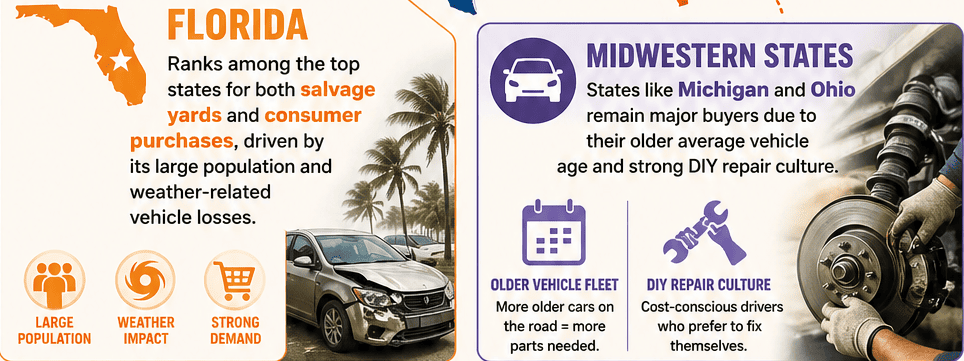
The United States of America is home to one of the largest used auto parts ecosystems. Nearly 10 of its States are proclaiming their respective dominance in this automotive aftermarket, which is projected to grow from $19.54 billion in 2025 to $25.02 billion by 2035.

|
Rank |
State |
Why Demand Is Strong |
Key Market Drivers |
|
1 |
Texas |
The largest used auto parts market in the U.S. |
Huge vehicle population, strong truck ownership, large salvage yard network, high DIY repair culture |
|
2 |
California |
The highest concentration of used auto parts stores |
Huge vehicle base, strict environmental regulations, high new-part prices, thriving eCommerce demand |
|
3 |
Florida |
Leading salvage yard density and strong consumer demand |
Frequent storm damage, aging vehicles, high accident rates, large retiree population |
|
4 |
Michigan |
Major automotive manufacturing hub |
Strong repair culture, deep industry roots, abundant salvage inventory |
|
5 |
Georgia |
Southeast distribution powerhouse |
Logistics infrastructure, expanding salvage operations, growing metro markets |
|
6 |
Ohio |
Strong Midwest aftermarket demand |
Older vehicle fleet, cost-conscious consumers, extensive repair shop network |
|
7 |
North Carolina |
Rapidly growing recycling market |
Population growth, suburban commuting, and rising vehicle ownership |
|
8 |
Pennsylvania |
Mature automotive repair market |
Aging vehicles, harsh winters, and high replacement-part demand |
|
9 |
Illinois |
Strong urban and commercial demand |
Dense population, fleet maintenance, active collision-repair industry |
|
10 |
Arizona |
Fast-growing Sun Belt market |
Expanding population, long vehicle ownership cycles, desert wear and tear |
Best Websites to Buy Used Auto Parts in the U.S. (2026 Guide)
The online mode for hunting quality used auto parts in the US has its own upside, like searching for multiple options tirelessly and without having to visit a local store in person. This is why buying used auto parts online has become the trusted and preferred choice for millions of drivers in the country. Kudos to recycling networks, eCommerce marketplaces, and certified auto recyclers spanning nationwide, buyers find it easy to locate everything from engines and transmissions to mirrors and headlights with just a few clicks.
Irrespective of your quest for a replacement engine, a rare OEM component with warranty-backed reliability, choosing the right website is what entails a great deal-making experience for buyers. Because the online mechanism is faster and accessible from anywhere, you also have enough time to make a comparative analysis of each website’s inventory, price, and other things that will help you make an informed decision to buy used auto parts for your beloved vehicle. Keeping your requirement in mind, here’s the list of top websites in tabulated analysis you can use to select the platform based on your needs.
|
Website |
Best For |
Key Strengths |
Potential Drawbacks |
Ideal Buyer |
|
Car-Part.com |
Salvage Yard Inventory |
Largest nationwide network of auto recyclers, excellent for OEM used parts, and local pickup options |
Website interface feels dated |
DIY mechanics and bargain hunters |
|
LKQ Online |
Certified Recycled OEM Parts |
Professionally inspected parts, nationwide warranty coverage, trusted national brand |
Pricing can be slightly higher than independent yards |
Buyers seeking reliability and peace of mind |
|
eBay Motors |
Rare and Hard-to-Find Parts |
Massive inventory, auction pricing, excellent for discontinued components |
Seller quality varies significantly |
Enthusiasts and owners of older vehicles |
|
RockAuto |
New and Remanufactured Parts |
Extremely competitive pricing, huge catalog, fast shipping |
Limited true used-parts inventory |
Budget-conscious maintenance shoppers |
|
CarParts.com |
Convenient Online Shopping |
User-friendly website, quick delivery, strong customer support |
Primarily focuses on new aftermarket parts |
Everyday drivers seeking convenience |
|
Parts Geek |
Competitive Pricing |
Wide selection, strong pricing, extensive brand coverage |
Customer service can be inconsistent |
Experienced online shoppers |
|
Pull-A-Part |
Self-Service Salvage Parts |
Lowest prices, ideal for hands-on buyers, excellent local inventory |
Requires removing parts yourself |
DIY enthusiasts and mechanics |
Quick Glance:
- Best of all: Car-Part.com
- Best Certified Used Parts: LKQ Online
- Best for Rare Components: eBay Motors
- Best Budget Option: RockAuto
- Best for DIY Salvage: Pull-A-Part
Concluding Statements
The used auto parts industry in the U.S has transformed in a big way. What was once a fragmented network of salvage yards has now transformed into the American automotive economy. Factors like rising repair costs, an aging vehicle fleet, and growing environmental awareness among citizens have been driving forces for millions of Americans to opt for recycled OEM parts as a smart, cost-saving alternative to buying a new vehicle or relatively expensive brand-new auto parts.
Gone are the days when a lower-cost alternative to buying a new vehicle is now a first priority for people who seek cost-effective solutions for their beloved vehicles, apart from professional repair shops, insurers, and even collision centers. And a big thanks also goes to the technological innovation that has been crucial in accelerating the shift. People can now buy used auto parts easily, safely, and with more confidence because of nationwide eCommerce platforms, strict quality standards, and modern inventory systems. No matter your preference for OEM, aftermarket, recycled parts, or online purchase from top platforms, the market offers you a sheer degree of convenience and value never seen before.
Looking forward, it is worth noting that the used auto parts industry of the US is strong-willed due to the rise of electric vehicles, growth of online marketplaces, and growing demand for sustainable automotive solutions. It is also worth noting that for American drivers, the used auto parts industry is not just a gateway to savings; it also symbolizes trust, accessibility, and environmental consciousness. And this is vital based on the fact that recycled auto parts actually allow people to drive on the road affordably, which matters in an era where every repair dollar holds value for the people.