
FIFA World Cup 2026 Merchandise Scams Are Already Showing Up: Here's How to Protect Yourself
Business to Consumer
July, 2, 2026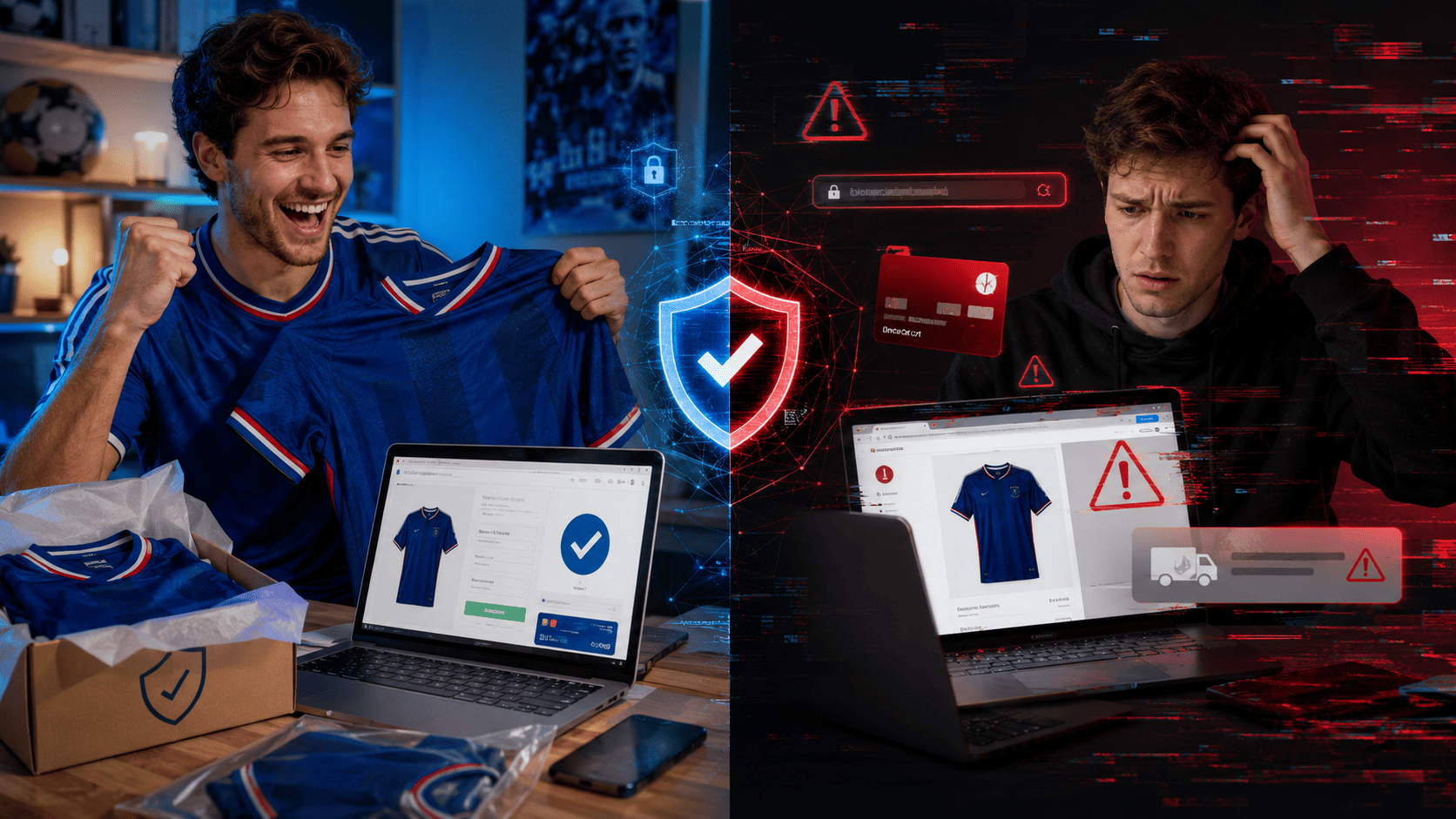
Picture this scenario, because it's playing out across the country right now. A fan orders a Brazil away jersey through what looks like a perfectly normal checkout page. They get a confirmation email, a tracking number, the works. Three weeks later, nothing arrives. The tracking number doesn't exist. The website itself has vanished entirely. The shirt never existed in the first place.
That fan is far from alone this summer.
The Scale of This Scam Is Genuinely Surprising
A quick look into how big this problem actually is reveals something bigger than the usual handful of pre-tournament scam warnings that show up every four years.
Between March and May 2026 alone, cybersecurity firm BrandShield tracked a 900% increase in fraudulent World Cup-related domains, with more than 10,000 suspicious websites detected. That's not a typo. Nine hundred percent, in roughly two months.
It's not just digital, either. Authorities have been seizing physical counterfeit goods at a pace that's hard to wrap your head around. Spanish police, working with Europol, Interpol, and the EU's intellectual property office, seized more than 66,000 fake football jerseys in a single coordinated operation ahead of the tournament. Toronto police separately seized over 16,000 fake jerseys and flags, plus, somewhat bizarrely, two counterfeit trophies. U.S. Customs and Border Protection intercepted over 16,000 counterfeit Nike World Cup jerseys in two linked shipments through Miami alone, and a separate Houston seizure turned up more than $6 million worth of fake merchandise in one swoop.
The FBI got involved too, issuing a formal advisory in late May that named 36 specific spoofed FIFA domains being used to run scams, fake ticket portals, fake employment listings, the works.
This is happening right now, while the tournament is actively underway across the US, Mexico, and Canada. The 48-team expanded format means more demand than any World Cup in history, and scammers have clearly noticed.
Why This Tournament Is Such an Easy Target
A few things are converging that make 2026 different from past tournaments.
For one, this is the biggest World Cup ever held, 48 teams instead of 32, 104 matches instead of 64, spread across three countries. More fans, more demand, more desperation to find merchandise when official stock runs low. ICE officials have noted that scammers specifically exploit the gap between fan enthusiasm and product availability, often using legitimate-looking product photos lifted straight from official retailers to sell goods that don't exist or arrive as cheap knockoffs.
There's also simply more places to get scammed than there used to be. Social media ads, marketplace listings, fake storefronts that mimic the real FIFA Store down to the layout — the surface area for fraud has expanded along with the tournament itself. One security researcher documented a scam campaign that displayed completely different storefronts depending on which country a visitor was browsing from, swapping in basketball jerseys for some users and soccer kits for others, depending on what would convert best.
How to Actually Tell a Fake Jersey From a Real One
For anyone holding a jersey or looking at close-up photos before buying, there are specific details worth checking.
Start with the crest. On an authentic jersey, the team badge is embroidered or heat-applied with genuinely sharp, clean edges. The small details, like the stars above a badge for a team with multiple titles or the tiny text underneath, stay crisp even up close. On fakes, those same details tend to blur, sit slightly off-center, or use the wrong color entirely. Flip the badge over where possible: an authentic embroidered crest shows neat, consistent stitching coming through the fabric. A fake often shows glued fabric with messy thread or a printed image that's started to bleed.
The fabric itself is another giveaway. Real match jerseys use specific technical fabrics, moisture-wicking material with a particular weight and drape. Counterfeits tend to use a generic, heavier polyester that feels closer to a basic gym shirt than performance wear. If it feels cheap to the touch, that's usually because it is.
Seams matter too. Authentic jerseys have flat, clean stitching that lies smooth against the fabric. Fakes often have raised, puckered seams that fold awkwardly when the material stretches.
Finally, the inside of the collar tells its own story. Genuine jerseys carry a properly stitched label or heat-applied tag with consistent fonts, correct spacing, and the manufacturer's actual product code. Counterfeiters frequently get the font wrong, misalign the tag, or skip proper labeling altogether.
The Online Store Red Flags Worth Knowing
Beyond the physical product, the website or seller behind it tells its own story.
The URL deserves close attention. Scam sites often add small variations that are easy to overlook at a glance: an extra word, a swapped letter, an unusual domain ending, or buzzwords like "official," "2026," or "WorldCup" stuffed in to sound legitimate. The actual FIFA Store URL is simple and clean. Anything that looks slightly off, unusually long, or just doesn't sit right deserves a second look before payment information goes anywhere near it.
Urgency is another tell. Phrases like "limited stock," "final release," or "buy now before they're gone" are classic pressure tactics designed to push a purchase before anyone has time to think it through. Genuine retailers rarely need to manufacture panic to sell World Cup merchandise; this year, demand is already high enough without the theatrics.
Pricing is worth a hard look as well. If a jersey that retails for $90–120 is suddenly listed at $25, there's a strong chance it's counterfeit, regardless of how convincing the product photos appear. The payment method is its own signal, too; legitimate retailers don't ask for cryptocurrency, gift cards, or wire transfers. Scammers do, specifically because those payment methods are nearly impossible to trace or reverse once sent.
Where Checking Reviews Actually Saves Money
This is the step most buyers skip, and it's often the one that would have prevented the loss in the first place.
Before paying any unfamiliar seller, searching the company name alongside "reviews" and checking different review platforms is one of the fastest ways to catch a problem early. A legitimate retailer, even a smaller one, will usually have a visible history of reviews, a mix of detailed feedback, and a business profile that's been active for a meaningful stretch of time. Scam operations built around a single tournament typically don't. They're often brand-new, carry suspiciously few reviews, or show a recent pattern of complaints specifically about non-delivery, wrong items, or unresponsive customer service.
Recent reviews matter more than an overall star rating. A seller could have decent ratings from years ago while having shifted tactics recently, or a fraudulent storefront could be impersonating a previously trustworthy brand name entirely. Reviews mentioning tracking numbers that don't work, items that never arrived, or sizing wildly different from what was ordered match exactly the pattern showing up across this summer's wave of complaints.
It takes two minutes. It costs nothing. And it's a far better use of time than discovering the problem after a card's already been charged.
The Bottom Line
None of this means buying World Cup gear should feel like a minefield; most purchases go completely fine, especially through recognized retailers. But the data this year is clear: counterfeit operations have scaled up dramatically alongside the tournament itself, both online and in physical shipments moving through customs.
Sticking to official channels where possible, the FIFA Store, brand sites for Nike and Adidas, and established retailers with a verifiable track record, remains the safest route. When buying from somewhere less familiar, a few extra minutes go a long way. Check the URL carefully. Look at the price with a skeptical eye.
A jersey is supposed to be a way to show up for a favorite team. It shouldn't cost more than the price tag suggests.